Why Company Stores Matter for Brands
If your teams are chasing logos, sizes, and shipping details every time someone needs merch, it is costing time and momentum.
Company stores solve that by giving staff, partners, and event teams a single place to order pre-approved, on-brand items. The result is fewer emails, faster turnarounds, and consistent brand quality across the business.
For B2B marketers and people teams, the upside is clear. Company stores make seasonal campaigns simpler, onboarding packs consistent, and last-minute event requests painless. They also build repeatable buying habits that protect budgets and reduce waste.
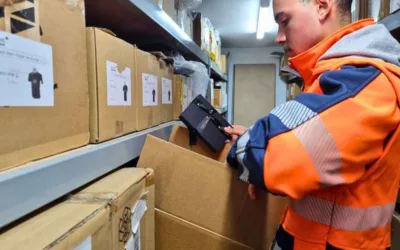
Quantium is a good example. We run their made-to-order apparel program worldwide, so nothing is made until staff place their orders and there is no leftover stock.
How a company store actually works
Think of it as your private merch portal with business rules baked in.
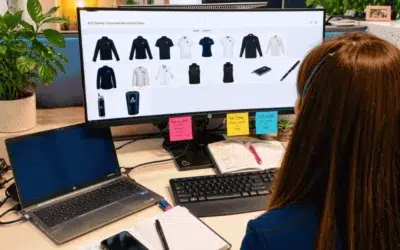
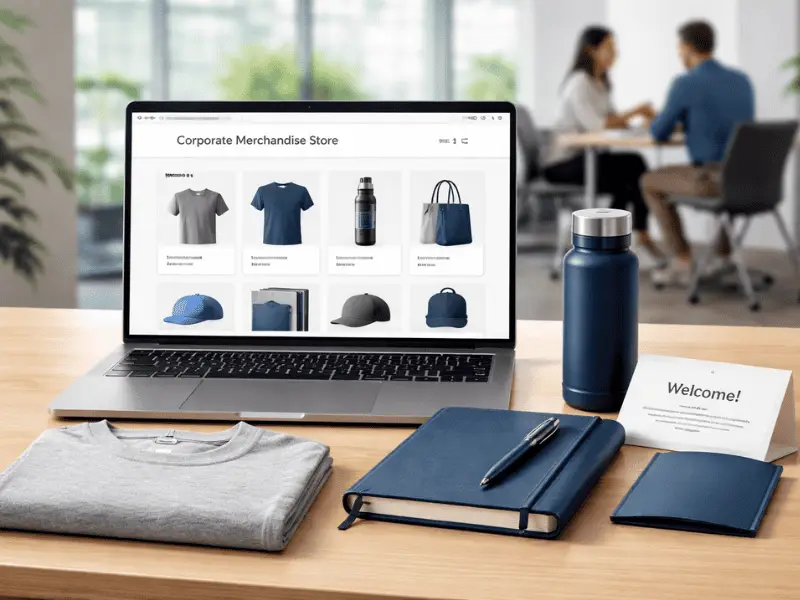
- Curated catalogue – Only approved products, colours, and brand assets appear.
- Tiered access – Locations, teams, or partners see what they should see.
- Smart budgets – Cost centres and credits keep spending controlled.
- Inventory and warehousing – Real-time stock, pre-packed kits, and reliable fulfilment.
- Local delivery options – Australia-wide shipping with service-level choices.

A well set up corporate store should remove the admin load from your team. Your team focuses on campaigns and culture, not purchase orders and spreadsheets.
The sticky-client effect
A great store becomes part of how people work. Managers know where to find onboarding packs. Sales knows where to grab meeting leave-behinds. Events know where to source prizes.
Those repeat behaviours mean predictable reorders, less supplier switching, and stronger brand adoption inside and out. It is not about locking people in. It is about making the easiest path the right one.
What successful brands put in their store
A great corporate merchandise store starts small, solves real needs, then grows with data. The goal isn’t to list everything under the sun. It’s to make everyday ordering simple, on brand and fast.
Start with the essentials below, then review monthly and expand only where the numbers back it.
Foundations
These are the items people order without thinking. Keep colours tight and decoration consistent.
- Apparel basics: Tees, polos, hoodies, caps.
- Desk essentials: Pens, notebooks, mouse pads
- Drinkware: Reusable bottles and mugs
Kits
Pre-packed bundles turn common events into one-click orders.
- Onboarding packs: Tee or polo, notebook, pen, drinkware, welcome card.
- Event packs: Branded tee, cap, lanyard, name badge holder.
- Client thank-you packs: Premium notebook, pen, snack, handwritten card.
Seasonal drops
Short, time-bound ranges that add excitement without bloat.
- Winter layers: Lightweight jackets or vests that layer over uniforms.
- Summer coolers: Caps, breathable tees, insulated bottles.
- EOFY gifts: Practical items with a small upgrade in perceived value.
Premium picks
A small set of higher-value items for recognition and partners.
- Examples: Wireless earbuds, premium drinkware, travel bags.
- Access: Hide behind role-based permissions or approval rules.
Sustainable swaps
Offer a credible alternative in each key category.
- Textiles: Recycled or organic blends with clear certifications.
- Paper goods: Recycled-paper or certified notebooks, recycled packaging.
- Refillables: Bottles and pens with replaceable components.
Personalisation
Add names or team lines on apparel and drinkware for specific groups or milestones.
- Use cases: New hires, sales kick-offs, project launches.
- Approach: Batch personalisation windows to control costs and lead times.
Common pitfalls to avoid
A store should feel simple on day one and smarter every month after. Focus on these five.
- Too many options: Decision fatigue hurts conversion.
Fix: Start with 12–20 core SKUs. Expand only when data shows clear demand. - No content rules: Inconsistent colours and artwork slow approvals.
Fix: Lock brand files, colourways and decoration methods. Add an artwork checklist and preflight step. - Ignoring change management: A quiet launch means low adoption.
Fix: Announce with email templates, banners and a 2-minute how-to. - No Key Performance Indicator: If you cannot measure it, you cannot improve it.
Fix: Track order frequency, average order value, budget use and on-time delivery monthly. - Set and forget: Catalogues go stale without a plan.
Fix: Review bestsellers quarterly. Add seasonal SKUs with exit dates and swap slow movers for proven styles. A reputable agency should proactively check in, review performance, and recommend strategic updates to keep your range working harder.
30 Buzz-Worthy Promo Picks
Download our free guide of merch + messaging to spark brand love.
30 Buzz-Worthy Promo Picks (Blog Lead Magnet)
Your rollout game plan
A smooth launch is about doing the right few things well. Start focused, then scale with real data.
Define the use cases
Pick the moments your store must serve from day one: onboarding, events, field uniforms, client gifting. Prioritise two so the range stays tight and adoption is fast. Write 1–2 sentences for each use case that spell out who orders, who approves and where it ships.
Build the core range
Select 12–20 SKUs that cover 80% of needs. Lock in colours, decoration and price tiers so every item ships on brand. Hold depth in proven sizes, use print on demand for long tails. Add one kit per use case to cut clicks and errors.
Decide fulfilment
Split items into stocked (fast movers) and made-to-order (niche). Set clear SLAs for each. Line up packaging, pick/pack rules and returns. Confirm national delivery options and a free-over-X threshold to lift basket size.
Launch with a moment
Make it feel like an upgrade, not a change. Send an internal email, add an intranet banner and share a 2-minute how-to. Offer a first-order code or a small welcome kit. Nominate store champions in key teams to answer quick questions.
Optimise with insights
Review monthly. Keep winners, retire slow items and tighten size curves. Turn common baskets into pre-packed corporate packs. Track order frequency, average order value, on-time delivery and adoption rate, then tune stock and approvals.
How Honeycomb delivers company stores that work
We build corporate merchandise stores that work in the real world.
From product curation and design to warehousing and last-mile delivery across Australia, we handle the heavy lifting while you keep control of budget, brand and approvals. Plug in Promotional Products, Brand Activations and custom Corporate Packs so your store supports every moment from onboarding to events.
1) Strategy first
We start with a short discovery to map your use cases, audiences, and approval rules. From there, we recommend the right platform, SSO approach, and payment workflow so the store fits how your business runs.
2) Curated range and brand control
Our team builds a tight, on-brand catalogue across apparel, drinkware, tech, stationery, and corporate packs. We lock in colourways, decoration methods, and file handling so every item ships brand-perfect. Personalisation is available for names and teams.
3) Warehousing, kitting, and fulfilment
We hold stock for fast movers, and run print-on-demand for niche sizes. Pre-packed kits cover onboarding, events, and client gifting. Orders ship Australia-wide with clear SLAs and live tracking.
4) Budgets, approvals, and cost centres
Role-based access keeps the right products in front of the right people. Cost centres and credits control spend. Optional manager approvals and PO capture keep finance happy.
5) Reporting that drives decisions
Monthly dashboards show order frequency, average order value, budget use, and delivery performance. We use the data to refine your range, retire slow items, and plan seasonal drops.
6) Sustainability, compliance, and quality
We prioritise recycled fabrics, FSC paper, and refillable drinkware. Ethical sourcing and factory compliance are non-negotiable. Every product is QC checked before it lands with your team.
7) Ongoing optimisation and support
A dedicated account manager reviews insights with you and keeps the store fresh. Need a new campaign bundle or a last-minute event pack? We handle it without blowing up your workflow.
Ready to launch your company store?
Give your team one place to order on-brand merch fast. We’ll map your use cases, approvals and budgets, then recommend the right platform, range and fulfilment so you can go live with confidence. Reach out to the Honeycomb team to get your corporate store started.
FAQs
What is a Corporate Merchandise Store?
Who should have access to our Corporate Store?
Typically managers, marketing, events, HR, and approved partners. Use role-based access so each group only sees what’s relevant to them.
Do we need to hold stock for a Corporate Store?
You can mix approaches. Stock fast movers for speed, use print-on-demand for niche sizes or low-volume items to reduce waste.