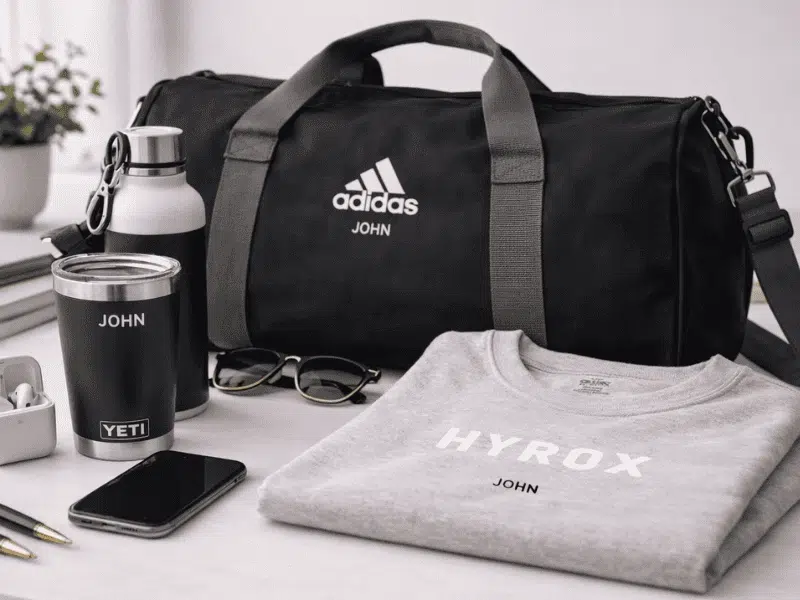
The best co-branding examples don’t feel like two logos sharing space. They feel like one idea brought to life through the right product, the right partner, and the right moment. In this guide, we’ll break down co-branding in merchandise, share formats that work for events and corporate, and show real Honeycomb activation examples. You’ll leave with a simple checklist to plan a collaboration that feels natural and gets used.
Co-branding is a smart way to grow, reach, build trust, and create something people genuinely want to keep. But there’s a difference between a collaboration that feels exciting and one that feels forced. This blog is about making sure yours lands.
Co-branding examples start with one truth
A collaboration works when the product makes sense for both audiences. That means the merch should feel like something a customer would buy or a team member would choose, not something they politely accept.
If the item doesn’t fit into someone’s day, it won’t get used. Simple.
Why co-branded merch performs
Co-branding promotional merchandise is popular because it doesn’t feel like “swag”. It feels like something you’d actually choose.
Research also suggests 71% of consumers enjoy co-branding partnerships, which is a strong signal that people are open to brand collaborations when they’re done well.
Shared audience: you show up in two communities at once
A good collaboration gives you instant access to a partner’s audience without having to build trust from scratch. That matters in B2B too, because decisions are still made by people who follow brands, trends, and quality signals.
What it looks like in merch:
- A shared event, shared pack, or shared drop
- Two brands promoting the same item, doubling organic reach
- A faster path to “this feels legit” for new prospects
Borrowed trust: partner brand equity lifts perceived quality
When your logo sits alongside a trusted retail brand, it changes how the item is received. It feels more like a gift, less like a giveaway.
Industry data backs up the trust effect:
- 82% of consumers respond positively to companies that give promotional products
- Promotional products can make consumers 2.5x more likely to have a positive opinion compared with online advertising
That’s why co-branding with premium retail items (think Nike, Yeti, The North Face style choices) often lands better than a generic alternative.
Higher perceived value: the product feels closer to retail than promo
Co-branded items tend to be higher quality because the product has to hold up to both brand standards. That quality shift changes behaviour.
Why it matters:
- People treat it like something worth keeping
- It’s more likely to be used in public (where it earns impressions)
- It reduces “drawer-death” because the item has a real job to do
Increased retention: people keep it longer
Longevity is one of the biggest differences between premium co-branded merch and standard giveaways. If it lasts, your brand keeps showing up.
A widely cited promo products benchmark: around 81% of consumers keep promotional products for more than 12 months.
Higher recall: it’s easier to remember who gave it to you
Useful, wearable, everyday merch sticks in memory. In ASI’s ad impressions research, 85% of consumers remember the advertiser on branded apparel items like shirts or hats.
That’s why co-branded apparel and drinkware perform so well: you’re attaching your logo to something that gets repeated use.
More shareability: limited runs and personalisation give people a reason to post
Generic merch rarely earns content. Co-branded merch can, especially when:
- it’s limited edition
- it’s personalised (names, initials, custom details)
- it feels like an “insider” item
This is where co-branding moves from distribution to demand. The item becomes proof of belonging, not proof of attendance.
Co-branding examples you can copy: 5 formats that work
Not every collab needs a big “launch”. These formats work especially well in B2B, events, retail, and community building, because they give people a clear reason to care.
1) Retail brand x limited drop (or personalisation moment)
This is the classic “I need it now” play: a product collab that feels collectible, giftable, and fast-moving.
Real-world examples:
- Haribo x Crocs: Limited-edition clogs inspired by Goldbears, with strong sell-out energy.
- Stanley x LoveShackFancy: A limited-edition tumbler collection that brought fashion styling into a functional product category.
2) Event partner x sponsor “merch moment”
This is where merch becomes part of the event experience, not just something you buy at a stall. Think VIP access, bundles, perks, or customisation that only exists onsite.
Real-world examples:
- Coachella x American Express: Amex regularly builds “member-only” perks around festival merch, including merch lanes, merchandise offers, and festival bundles.
3) Employer brand x premium product brand (corporate gifting)
This is the “quality by association” play. Teams don’t want more things, they want fewer, better things. Premium co-branded gear often feels like a reward rather than a giveaway.
Real-world examples:
- The North Face Corporate Sales Program: explicitly designed so organisations can promote their brand alongside The North Face on premium gear.
- Patagonia Group Sales: a pathway many organisations use for high-quality team gear and gifting, with the added benefit of sustainability alignment.
4) Cause partnership (values-led collabs)
When the partnership is values-aligned, the product carries meaning. It’s a collaboration people feel good about wearing, using, and sharing.
Real-world examples:
- Apple x (PRODUCT)RED: long-running partnership where products and campaigns support the Global Fund.
- adidas x Parley for the Oceans: collaboration focused on products made with Parley Ocean Plastic and broader sustainability initiatives.
5) Community or membership exclusives (drops people chase)
This is co-branding built for culture. Limited releases become a badge of belonging, especially when there’s a strong fan base on both sides.
Real-world examples:
- Supreme x Nike: long-running collaboration known for limited releases and high demand, often landing as “drop culture” moments.
Honeycomb real world co-branding examples
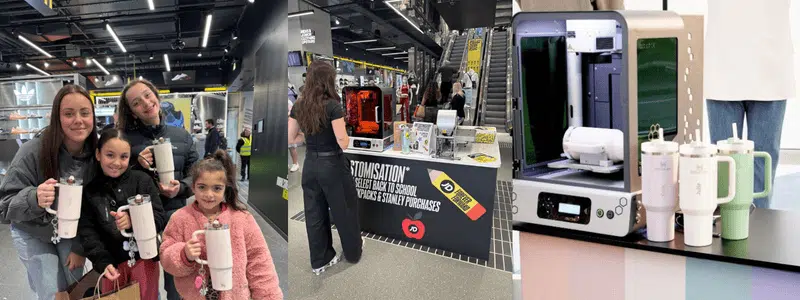
Stylerunner x Honeycomb: personalised Stanley cups
Instead of inventing a new product, this activation elevated an already in-demand item. Customers could laser engrave Stanley cups in-store, turning a popular purchase into something personal and giftable.
Why it worked: premium product, clear audience fit, and personalisation that created genuine excitement.
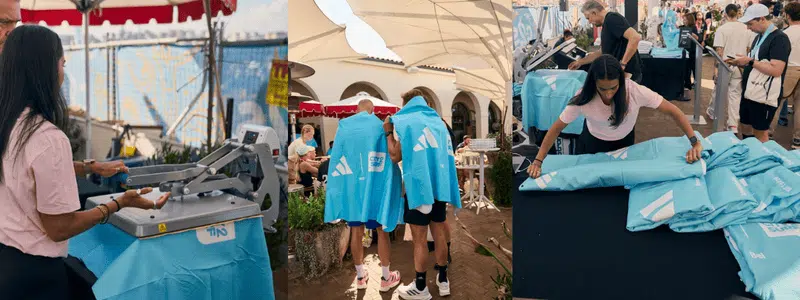
Adidas x Honeycomb: AdiClub member personalisation
At City2Surf, we delivered on-site personalisation for AdiClub members, customising blanket capes using heat transfer. The product was functional on the day and highly visible in photos.
Why it worked: AdiClub fit the event and the audience, and the capes solved a real post-run need. Personalisation made them feel member-only, earned, and worth keeping.
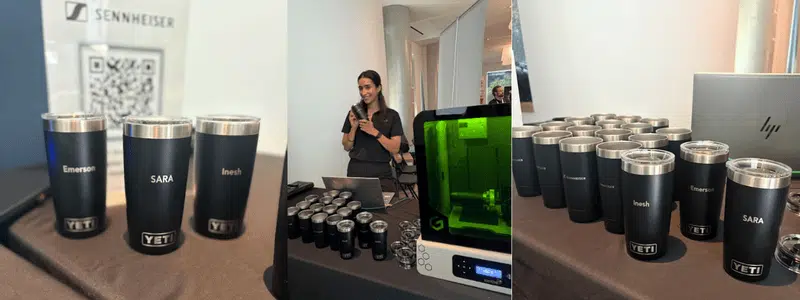
YETI x Honeycomb: Personalised Tumblers
YETI tumblers are known for durability and performance. We added personalisation to match. Live Engraving turned a premium drinkware product into a customised keepsake at events and retail activations.
Why it worked: Strong brand equity paired with subtle, high-quality Engraving made the product feel even more premium.
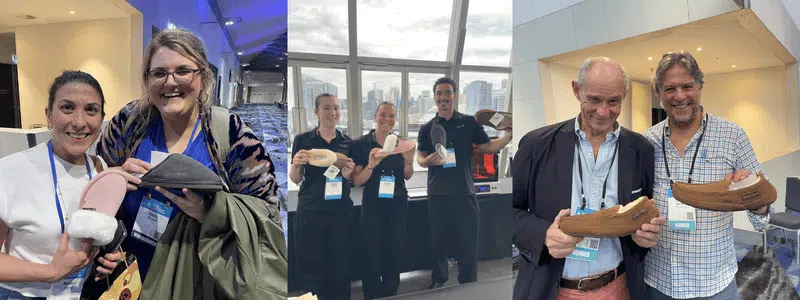
UGG x Honeycomb: Engraved Boots
At a premium international event, we Engraved UGG boots live on-site, personalising around 100 pairs across multiple styles. Guests watched their footwear customised in real time, adding theatre to an already high-value gift.
Why it worked: A distinctly Australian product combined with live Engraving created a premium, wearable brand moment the international audience genuinely engaged with.
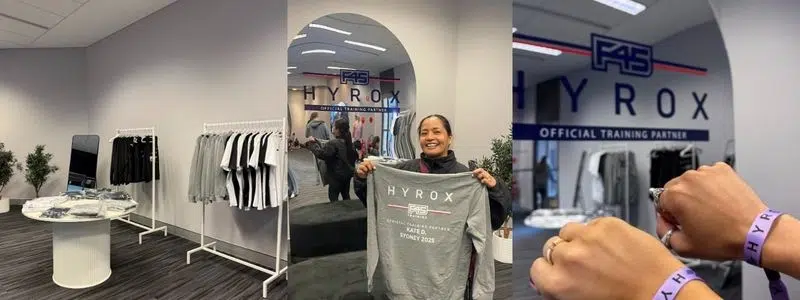
HYROX x Honeycomb: Personalised Apparel
At HYROX fitness events, we delivered on-site apparel personalisation using Heat Transfer, allowing competitors to customise their event merchandise post-race.
Why it worked: The gear represented achievement. Adding names or details made it feel individual, not just merch, but a badge of effort.
Common mistakes to avoid
Most co-branded merch falls short for predictable reasons:
- Forcing the partnership: if the pairing doesn’t make sense, people feel it. If your audiences don’t naturally overlap, the collab reads like a marketing stunt, not a genuine match.
- Over-branding: lead with design and desirability, then brand with restraint. When both logos compete for attention, the product loses that “retail” feel and starts looking like a compromise.
- Wrong product choice: if it feels cheap or impractical, it won’t last beyond the event. Co-branding only works when the item is genuinely useful or wearable, otherwise it ends up in the drawer.
- No rollout plan: merch without a distribution and content plan is a missed opportunity. If you don’t plan the drop, the moment, and how it will be shared, you’ll lose the momentum that makes co-branding powerful.
If you want the collaboration to perform, think beyond the item. Build the moment, the channel, and the reason to care.
The takeaway
The best co-branding examples sit at the intersection of fit, function, and a clear reason to share.
If you’re planning a co-branded activation, gift pack, or limited merch drop, Honeycomb can help you choose the right products, shape the experience, and deliver a rollout that gets noticed. Reach out to our team today to explore how your brand can leverage co-branding opportunities.
30 Ways To Wow With Merch
Grab our guide packed with merch and creative taglines.
30 Buzz-Worthy Promo Picks (Blog Lead Magnet)
FAQs
What merch should I put in a corporate wellness pack?
Start with one item that supports the workday and one that supports a reset. Easy winners include an insulated mug, heat pack, hand cream, lip balm, herbal tea, a notebook, a desk-friendly stretch band or a sleep mask for wind-down.
How many items should be in a winter wellness pack?
Usually 4 to 6 items. It feels generous without becoming filler, and it keeps the pack cohesive and premium.
Should branding be big and obvious on wellness items?
Subtle works best. Small placement on drinkware, a woven tag on apparel, or a deboss on stationery feels more gift-like and gets used more often.
Can winter corporate gift packs work for remote teams too?
Yes. If you’re shipping to homes, prioritise compact, lightweight items that feel cosy straight away, like tea, socks, candles, mugs and message cards.
Can co-branding work for corporate gift packs?
Yes. It works especially well when you combine a premium product with thoughtful packaging, printed inserts, and optional personalisation.