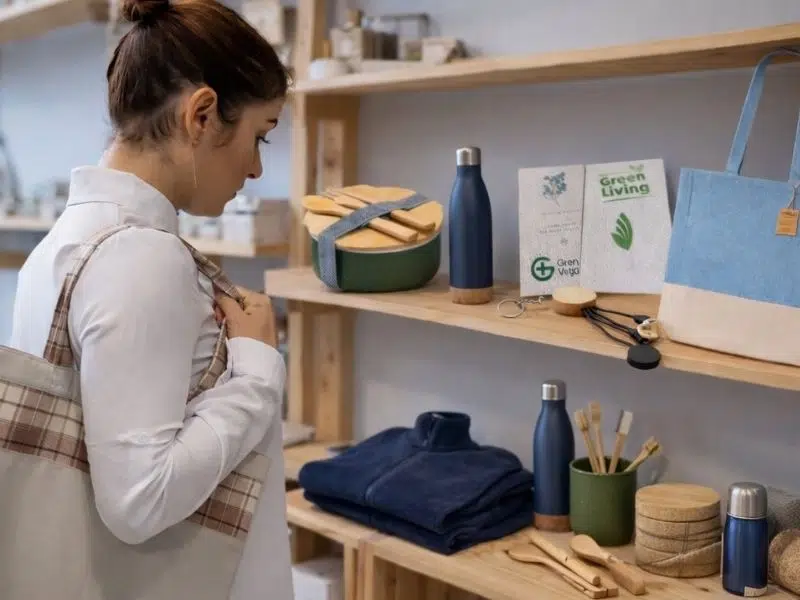
Why sustainable merchandise matters for brands
Your merch should work hard for months, not minutes. When you choose better materials, ethical production and useful designs, you reduce waste and earn more real-world brand impressions. That is good for the planet and good for ROI.
The Honeycomb checklist for sustainable merchandise
Use this quick lens when planning your next order.
1) Choose materials with a lighter footprint
Prioritise options that are recycled, renewable or certified. Think GOTS organic cotton for tees and totes, rPET for bags and jackets, cork or recycled paper for stationery. Fewer resources in, less waste out.
2) Work with transparent, ethical suppliers
Ask for certifications where relevant, clear product specs and honest answers about sourcing. If a claim feels vague, it probably is. Responsible partners should be able to show how people and the planet were considered through production.
3) Design for daily use (and long life)
Keep branding simple and focus on items people reach for every day. Useful beats novelty. Subtle prints and tidy packaging encourage repeat use and reduce bin-bound giveaways.
These pillars mirror the best practice many trusted merch providers emphasise: sustainable materials, ethical suppliers and longevity-first design.
Materials guide: What to Choose and Why
Use these five common materials as a starting point. Pick the material that suits the product’s life, not just the label.
Bamboo
Best for: cutlery sets, toothbrushes, straws, desk items.
Why it’s good: fast‑growing, renewable, lightweight.
Organic cotton (GOTS preferred)
Best for: tees, totes, caps, hoodies.
Why it’s good: grown without synthetic pesticides, kinder to soil and farmers.
FSC‑certified wood
Best for: pens, awards, boxes, name badges.
Why it’s good: responsibly managed forests, durable and repairable.
Cork
Best for: coasters, notebooks, mouse pads, desk organisers.
Why it’s good: harvested from bark without felling trees, naturally water‑resistant and grippy.
Watch‑outs: pair with recycled backings and low‑impact glues.
Recycled PET (rPET)
Best for: bags, jackets, umbrellas, lanyards.
Why it’s good: diverts plastic from landfill, strong and versatile.
Smart eco picks that teams and customers love
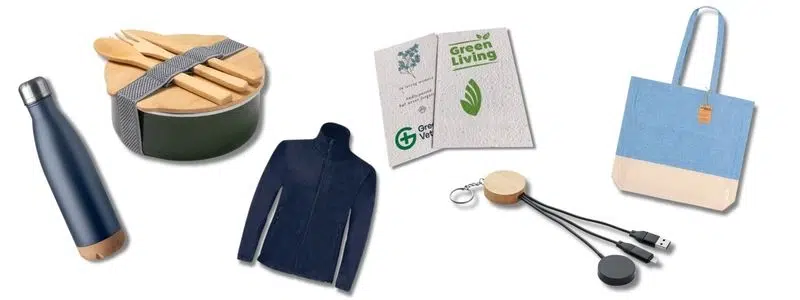
Practical, well‑made items get used again and again. Here are ten dependable winners and why they shine.
- Reusable drinkware with recycled content
Everyday use, laser‑etched branding that still looks fresh after many washes. - Organic cotton totes or caps
Classic shapes, tidy prints and neutral colours earn more wear. - Recycled notebooks with refillable inserts
Keep the cover, replace the paper and reduce waste over time. - Tech accessories in rPET or wheat‑straw blends
Cables, mouse pads or cases that tidy desks and travel well. - Plantable seed cards
Pair with event invites or thank‑yous for a small, memorable touch. - Stainless steel lunch boxes
Durable, easy to clean and perfect for hybrid‑work days. - Bamboo cutlery and straw kits
Handy for office kitchens and events so fewer disposables are used. - rPET umbrellas
High visibility on rainy commutes and long brand life when built well. - Cork desk organisers
Keep workspaces neat; natural texture adds warmth to corporate desks. - Recycled‑blend hoodies or crews
Comfort piece teams actually wear, with subtle embroidery that lasts.
30 Promo Ideas That Shine
Free guide with merch + messaging to inspire your next campaign.
30 Buzz-Worthy Promo Picks (Blog Lead Magnet)
How Honeycomb can help
We partner with vetted suppliers, recommend certified materials and design branding that looks good today and next year.
If you want to kit out a team, welcome new hires or run an event, we curate sustainable merchandise that aligns with your goals, timeline and budget.
Wrap up: plan your eco merch with us
Choose practical, low‑waste pieces people use every day. Bundle them into thoughtful kits, backed by credible materials and responsible suppliers, and your brand will stay in rotation, not in the bin.
Ready to build your shortlist?
- Book a planning chat: Click Here
- Browse Available Products: Click Here