Businesses spend money on ads, but most people scroll past them in seconds. Once the budget runs out, the brand disappears from their screens, and customers soon forget it.
Branded merchandise solves this problem because a useful item, like a drink bottle or tote bag, can stay with a person for months or even years. Each time they use it, they see the brand again at no extra cost.
After years of creating merchandise for Australian businesses, our team at Honeycomb Agency has seen what works. Here are the key benefits and how businesses can make the most of them.
Key Takeaways
- Branded merchandise is any useful item that carries a logo or brand message.
- It gives a brand repeat exposure at a low cost per impression.
- The best items match the audience, the brand and a clear campaign goal.
- Quality, packaging and timing matter as much as the product.
- Simple tools like QR codes and unique links show what is working.

What Is Branded Merchandise?
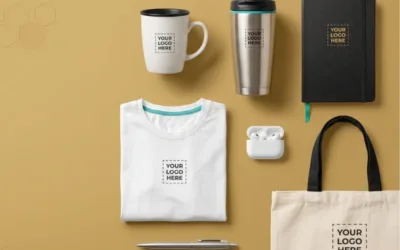
Branded merchandise is any physical item that carries a company’s logo, name or message. It includes everyday products like drink bottles, tote bags, notebooks, apparel and tech accessories that people use at work, at home and on the go.
Businesses give branded merchandise to customers, staff, partners and event guests. It often appears as a thank-you gift, a welcome pack or an event giveaway, and it can also form part of a larger marketing campaign.
Branded merchandise and promotional products mean almost the same thing, and most businesses use both terms for the same items.
Why Branded Merchandise Works
Branded merchandise works because it is useful, and people use a good product often, so every use gives them another chance to see the brand.
It Becomes Part of Daily Routines
A useful item fits into daily life, like a drink bottle for workouts, a tote bag for the shops or a notebook for meetings.
Each use shows the logo to the owner and to the people around them. Over months of use, a good product keeps promoting the brand without any extra spend.
Branded Merchandise by the Numbers
Research shows that promotional products help people remember brands and choose them over competitors. Here are the key findings from ASI’s 2026 Global Advertising Impressions Study.
- 85% of consumers remember the advertiser who gave them a promotional product.
- 78% of consumers keep promotional products because they find them useful.
- 76% of consumers are more likely to do business with brands that give them branded merchandise.
- A branded tote bag generates thousands of impressions over its life, at a fraction of a cent for each one.

The Key Benefits of Branded Merchandise
Branded merchandise offers a range of benefits, from stronger brand recall to lower advertising costs. Here are the main ones for Australian businesses.
Builds Brand Recognition and Recall
Branded merchandise builds recognition through repetition, because every time someone uses the item, they see the brand’s logo, colours and name.
Over time, the brand becomes familiar, so when that person needs a similar product or service, the brand’s name comes to mind first.
Creates Emotional Connection and Loyalty
A useful gift makes people feel valued, and that creates goodwill. Many people then want to give something back, such as choosing the brand when they buy. This natural response is called reciprocity.
A thoughtful gift is also a simple way to thank existing clients. Keeping current customers usually costs less than finding new ones, so even a small gift can help build loyalty and bring strong returns.
Cost-Effective, Long-Running Advertising
Branded merchandise has a low cost per impression, which means each time someone sees the brand, it costs the business very little. This is because one item is seen many times over its life.
ASI research shows that a typical promotional product generates around 3,300 impressions over its life, at a fraction of a cent for each one. Premium items like fleece jackets cost even less per impression, because people keep and use them for longer.
A business pays for the item once, and it keeps promoting the brand for months or even years, with no ongoing costs.
Shapes How People See a Brand
People often judge a business by the quality of its merchandise. A well-made product shows that the brand cares about quality, but a flimsy item that breaks quickly can make the business look careless.
Branded merchandise can also show what a business stands for. Choosing eco-friendly promotional products such as recycled totes, bamboo items or reusable cups tells people that the brand cares about the environment.
Extends Reach by Turning Customers Into Brand Ambassadors
Branded merchandise also reaches new people. When someone wears a branded hoodie at a café or carries a tote bag on the train, everyone nearby sees the logo too.
People often share good merch on social media, and unboxing videos, photos and tagged posts introduce the brand to new audiences at no extra cost. For small businesses, a simple social media giveaway can boost followers and engagement too.
Helps Brands Stand Out From Competitors
While most brands compete for attention on screens, a physical item is much harder to ignore. A well-designed product gives people something they can touch, use and remember.
Custom decoration, quality packaging and clever kitting (grouping several items into one gift pack) help a brand look different from the rest.
Reaches Exactly the Right People
With branded merchandise, the business chooses who receives each item. Paid ads often show to broad groups, but merchandise goes straight to the people the brand wants to reach.
Businesses can also choose products that suit each audience. Here are some examples.
- Construction and mining crews value tough drinkware, cooling towels and hi-vis caps that suit long days outdoors.
- Corporate clients value quality notebooks, cable organisers and laptop sleeves for busy workdays.
- Schools and community groups value totes, stationery and sunscreen for everyday activities.
- Outdoor event guests value sun-smart hats, umbrellas and drink bottles for time spent outdoors.
Drives Action Without the Hard Sell
Branded merchandise can also prompt people to take the next step, such as visiting a web page or booking a call. A QR code printed on the item makes this easy, and a small card with a discount code works well too.
Because the gift feels generous, the invitation to act does not feel pushy. It also links the physical item to a brand’s online marketing.
Engages and Unites Teams
Branded merchandise also works inside a business. Quality apparel, onboarding kits and team gifts help staff feel part of the company, and new hires feel welcome from day one.
Staff who wear the brand with pride also promote it in public. Many businesses use onboarding packs for new starters and corporate stores so teams can order branded apparel whenever they need it.
Drives Leads and Engagement at Events
At trade shows and conferences, useful merch draws people to a stand, and a quality item can be offered in exchange for contact details or a quick demo.
Simple ideas like a compact cable tidy, a pocket notebook or a drink bottle refill station give people a reason to stop and start a conversation. A short chat at the stand is often what turns a passing visitor into a real lead.

What Great Branded Merchandise Looks Like
Great branded merchandise is useful, well made and linked to a clear idea. The examples below show how well-known brands have done this.
Brands That Get It Right
- Coca-Cola: The Share a Coke campaign launched in Australia, where Coca-Cola replaced its logo on bottles and cans with the 150 most popular local names. People searched for their own names and shared photos online, and Coca-Cola reports that more than 250 million named bottles and cans sold that summer in a country of fewer than 23 million people.
- Lululemon: Its reusable shopping bags come free with a purchase and carry the brand’s manifesto quotes. As Bulletin Bag notes, customers use them for groceries, the gym and everyday errands, which keeps the brand visible well after the sale.
- IKEA: The Frakta bag has sold in the hundreds of millions since 1996. When Balenciaga released a leather tote that looked much like it, IKEA replied with an ad showing people how to spot the real one, and fans posted homemade fashion pieces made from Frakta bags.
- Starbucks: On Red Cup Day, customers who order a handcrafted holiday drink get a free reusable red cup made with recycled materials. Bringing the cup back to any store earns a small discount on the next drink, which turns a one-day giveaway into repeat visits all season.
A Honeycomb Example
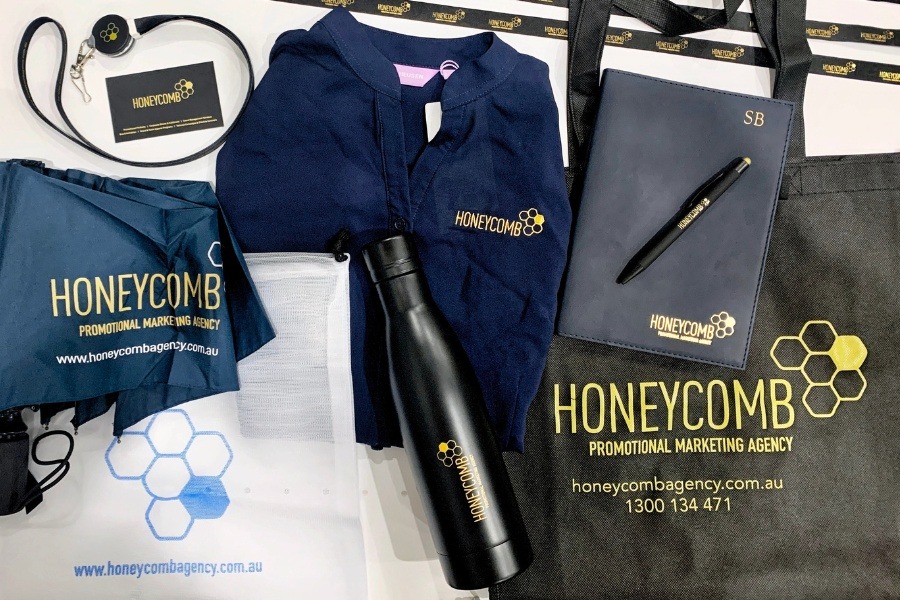
We created a self-promotion pack for our own clients at a time when many marketing teams felt unsure about their future campaigns and events.
Our idea centred on openness and new possibilities, so the pack included a custom umbrella, Honeycomb chocolates and bespoke packaging with messages that encouraged fresh thinking.
The campaign won an APPA Award for Distributor Self-Promotion, and it still comes up in conversations with clients today.
How to Choose the Right Branded Merchandise
Lead with the Message, Then Choose the Product
The strongest merchandise campaigns follow three simple steps, and each one builds on the last.
- Message. Decide what people should remember about the brand or campaign.
- Product. Choose an item that supports that message and suits the audience.
- Experience. Use packaging, presentation or personalisation to make the moment memorable.
For example, a notebook suits a campaign about new ideas, and a plant kit suits one about growth. In both cases, the item repeats the message every time someone uses it.
Match the Item to the Audience and Brand
The right item depends on the audience and the brand. Ask these questions before ordering.
- Who will receive this item?
- Will they use it often?
- Does it suit the brand’s look and values?
- Is there room for a personal touch, such as a name?
- Would the recipient be happy to be seen using it?
Branded Merchandise Ideas by Category
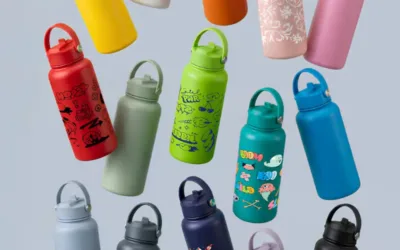
- Drinkware: Stainless steel bottles, insulated cups and tumblers for daily use at work or the gym.
- Apparel: T-shirts, hoodies, caps and workwear for teams and event staff.
- Bags: Tote bags, backpacks and cooler bags for conferences and everyday errands.
- Tech: Chargers, cable organisers and phone stands for office and corporate clients.
- Desk items: Notebooks, pens and desk organisers for meetings and onboarding kits.
- Wellness: Cooling towels, resistance bands and sunscreen for outdoor teams and health campaigns.
- Eco-friendly: Recycled totes, bamboo items and reusable cups for brands with sustainability goals.
Split the Budget by Audience
Not every recipient needs the same item, so splitting the budget into three tiers helps the spend match the value of each relationship.
- Tier one: Premium gifts for key clients and partners, usually the largest share of the budget.
- Tier two: Quality everyday items for regular clients, staff and suppliers.
- Tier three: Lower-cost, high-volume items for event guests and prospects.
If the budget is small, focus on a single tier and do it well. Choosing the audience that matters most is more effective than spreading the spend thinly across all three.
Understand What Goes Into the Price
The price on a product page is usually only the base cost. Several other factors shape the final price per unit, and each one is worth checking before ordering.
- Base product cost: This is the price of the plain item before any branding, and larger orders usually lower the price per unit.
- Decoration: Printing, engraving and embroidery all cost different amounts, and extra colours or print positions add to the total.
- Setup fees: This one-off cost covers screens or plates, so it is spread across the whole order. The larger the order, the less it adds to each unit.
- Delivery: The size, weight and destination of an order all affect freight costs, and rush delivery adds more.
- Extras: Gift boxes, custom packaging and personalisation add cost, but they also lift how valuable the gift feels.
Always ask the supplier for an all-inclusive quote that covers the product, decoration, setup, delivery and any extras. This makes it easier to compare options and avoid surprises.
Common Mistakes to Avoid
Even a good product can fail when the plan behind it is weak. Here are eight common mistakes we see, and what to do instead.
- Mismatching the merch to the goal. Handing out the same item to everyone ignores what each relationship is worth. Start with the goal, then choose merch that matches the value of that relationship, whether the aim is to engage a few key clients or reach a large crowd at an event.
- Choosing low cost over quality. Flimsy items break quickly and can damage a brand’s reputation.
- Ignoring message and design. A logo alone is not a strategy, so think about colours, placement and tone before the order goes ahead.
- Overlooking packaging and delivery. A great product in a plain mailer loses impact, because the experience starts the moment the box is opened.
- Forgetting the brand. The design, tone and choice of item should reflect what the brand stands for, or the gift feels disconnected from the business that sent it.
- Ignoring lead times. Rush orders cost more and leave no time for samples, quality checks or artwork changes.
- Forgetting the user. Poor sizing or leaky bottles send the wrong message, so test how the item performs before ordering in bulk.
- Treating merch as a transaction. Every item is a brand touchpoint, so it deserves the same planning as any other campaign.

How to Measure Whether Branded Merchandise Is Working
Branded merchandise is easier to track than many people expect. Choose one or two metrics for each campaign, then use these simple tools to measure them.
- QR codes that link to a tracked web page
- Unique discount codes for each campaign
- Short custom URLs printed on the item or card
- Campaign hashtags on social media
- Leads collected at events
- Repeat orders or referrals after a gift
- A short survey asking recipients what they liked
Review the results after each campaign to see which items and messages worked best. Those findings make the next order easier to plan and easier to justify.
Plan a Branded Merchandise Campaign with Honeycomb
Honeycomb Agency helps Australian businesses plan, source and deliver branded merchandise, from strategy and product selection through to decoration, packaging and fulfilment.
Contact our team to talk through the next campaign.
FAQs
What are the benefits of branded merchandise?
The main benefits of branded merchandise are stronger brand recognition, greater customer loyalty and low-cost advertising.
It also helps businesses stand out from competitors, reach specific audiences, engage staff and generate leads at events. Because useful items stay with people for months or years, one purchase gives a brand repeated exposure at no extra cost.
Is branded merchandise cost-effective?
Yes. Branded merchandise often has a lower cost per impression than other forms of advertising. ASI research shows that a branded tote bag generates thousands of impressions over its life, at a fraction of a cent for each one. The business pays once, and the item promotes the brand every time someone uses it.
Does branded merchandise work?
Yes, when the item is useful and suits the audience. PPAI research shows that most consumers can recall the brand on a promotional product they received in the past two years. Poor quality or irrelevant items are much less effective.
How do I choose the right merch?
Start with the campaign message, then choose a product that supports it. The best items are ones the audience will use often and that suit the brand's look and values. Quality, decoration, packaging and budget all matter too, and a promotional merchandise agency can help compare the options.
What is the difference between branded merchandise and promotional products?
There is very little difference, since both terms describe items that carry a company's logo or message. Some businesses use "branded merchandise" for premium items linked to brand identity, and "promotional products" for giveaways in larger volumes. Most people use the two terms for the same thing.
How much does branded merchandise cost?
The cost of branded merchandise varies widely, because the final price depends on the base product, decoration method, setup fees, quantity and delivery. Larger orders usually lower the cost per unit, and asking for an all-inclusive quote helps avoid surprises.
How far ahead should I order branded merchandise?
Order branded merchandise 3 to 4 weeks ahead for most products, and allow 6 weeks or longer in busy periods such as December. This leaves enough time for mock-ups, samples, production and delivery.
Is branded merchandise worth it for small businesses?
Yes. Branded merchandise suits small businesses because one item keeps promoting the brand at no extra cost, which helps a modest budget go further. It also builds recognition and loyalty early, and gifting existing customers can be as effective as chasing new ones. A good first step is one quality item for top customers or the next event.
Does personalisation make a difference?
Yes. Adding a name or custom detail makes an item more personal and memorable, and recipients tend to value personalised gifts more highly. Personalisation works well for client gifts, staff onboarding kits and VIP events.
Can branded merchandise improve employee engagement?
Yes. Branded apparel, onboarding kits and team gifts help staff feel recognised and part of the company, which supports morale and retention. New hires feel welcome from their first day, and staff who wear the brand with pride also promote it in public. Internal merch works best when the items suit daily work life rather than sitting in a drawer.
How do I design branded merchandise that stands out?
Start with the campaign message, then choose a product that supports it. Keep the design clean, use brand colours and think about where the logo sits on the item. Quality decoration, thoughtful packaging and a personal touch such as a name all help the item feel considered rather than generic. Always check a digital mock-up or a physical sample before the full order.
Why are promotional products important?
Promotional products are important because they give a brand repeated exposure at a low cost. Unlike ads that stop when the budget runs out, a useful item keeps promoting the business every time someone uses it. ASI research shows that most consumers remember the advertiser who gave them a promotional product.
How do I use promotional products effectively?
Start with a clear goal, such as event leads, staff onboarding or client thank-yous. Choose one useful item that suits that audience, add thoughtful packaging, and include a simple way to track results such as a QR code or discount code. Review what worked before the next order.