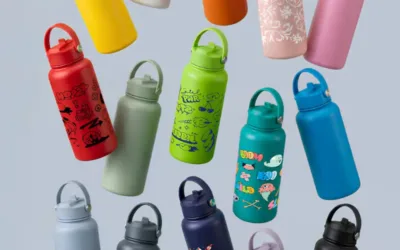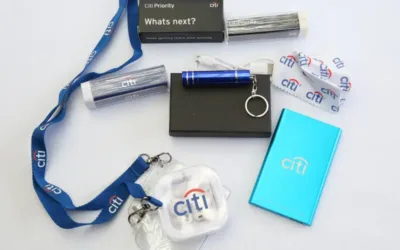
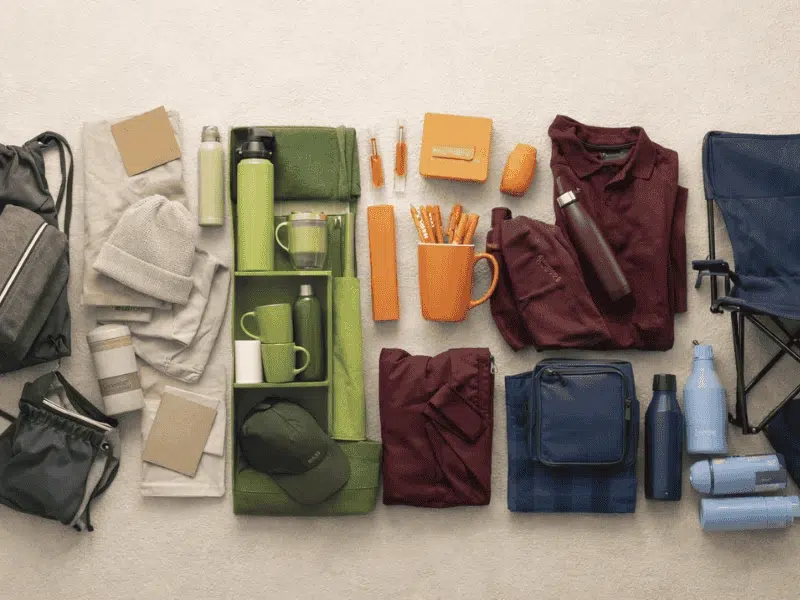
Often merchandise planning starts with the product. Drink bottle, tote, notebook, done.
But colour can be a large part of what your audience registers first. It shapes how premium something feels, whether your logo is easy to read, and how “together” the whole campaign looks when it’s laid out on a table or opened as a gift pack.
That’s why planning promotional merchandise by colour is such a smart move. Instead of hunting for items one by one, you build a palette first, then choose products that fit.
Start With a Moment: What Do You Want People to Feel?
Picture this.
You’re setting up for a conference. Two brands are handing out the same type of merch. One looks like a mix of whatever was available. The other has a clear palette: matte black drink bottle, stone notebook, a punchy teal accent on the lanyard and packaging. Same budget. Totally different vibe.
Colour helps you control that vibe. And it matters because colour can influence perception and decision-making quickly, especially at-a-glance.
The Psychology of Colour
You don’t need to turn into a designer to use colour well. You just need to understand what people assume a colour means, because those assumptions shape how your merchandise is received.
Colour works on two levels at once:
- Emotional: how it makes people feel (calm, excited, cared for)
- Practical: how clearly your branding shows up (contrast, visibility, reusability)
Here are the most useful cues to keep in mind when choosing promotional merchandise by colour.
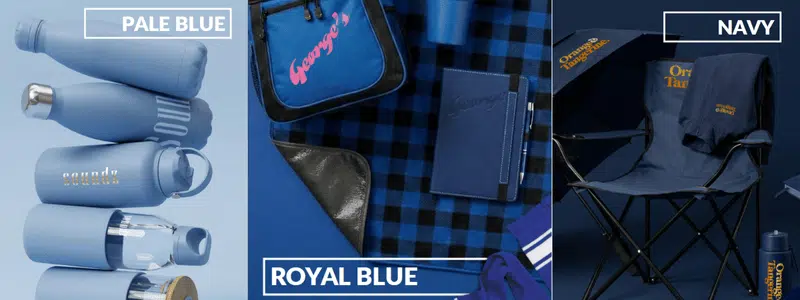
Blue: trust and “we’ve got this”
Blue is the safe choice for a reason. It signals reliability, stability, and professionalism. It works especially well for:
- corporate gifting
- onboarding kits
- conferences where you want to look polished and credible
Tip: Blue is also easy to pair with neutrals. Navy + white, royal blue + grey, or soft blue + stone tends to look premium without trying too hard.
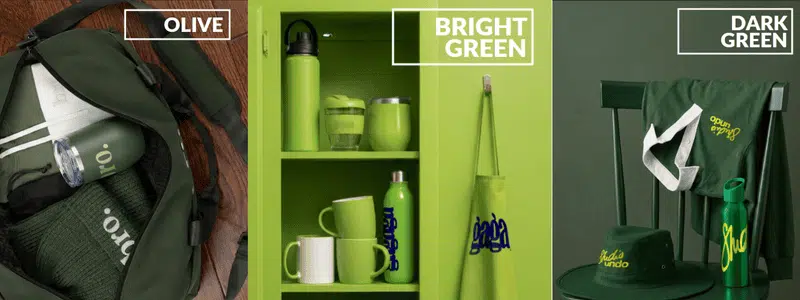
Green: wellbeing, nature, and values-led brands
Green often reads as fresh, thoughtful, and people-first. It can also signal sustainability, even if the product itself isn’t explicitly eco-focused.
It works especially well for:
- wellness initiatives
- community events
- brands that want to feel grounded and values-driven
Tip: Use green as an accent if your logo colour is tricky. A small green highlight (like a tote strap, lid colour, or packaging detail) can add “freshness” without locking you into a full green range.
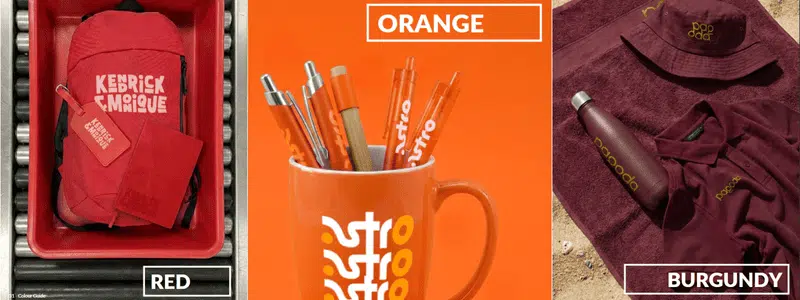
Red and orange: energy, attention, and action
These colours are built for visibility. They feel bold, fast, and confident, which is why they’re great for campaigns where you want people to notice you quickly.
They work especially well for:
- product launches
- event giveaways
- campaigns tied to urgency or momentum
Tip: Because red and orange are strong, they’re often best used as a hero colour on one or two items, not everything. Pair them with black, white, or charcoal to keep the range looking intentional.
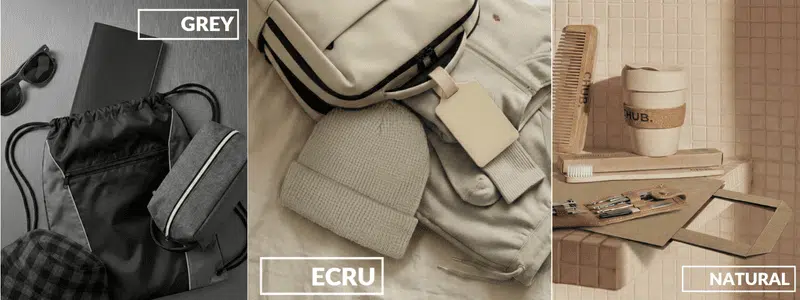
Neutrals: premium, minimal, and broadly wearable
Black, white, stone, grey, and charcoal are the quiet achievers. They make your branding feel elevated and they’re the colours people are most likely to actually use day-to-day.
They work especially well for:
- executive gifting
- staff packs
- “keep forever” items like drink bottles, notebooks, bags
Tip: Neutrals give you more flexibility with logo colourways. If your logo is multi-colour, neutrals are often the easiest backdrop to keep it readable.
The real trick: consistency beats variety
Even the perfect colours can fall flat if the range feels random.
A cohesive colour story usually looks like:
- 1 base colour (the foundation)
- 1 accent colour (the punch)
- 1 contrast colour (so your logo pops)
That’s how you get merchandise that feels like a campaign, not a collection of items.
The Colour-First Framework
Here’s the simple approach we use when clients want a campaign range that looks considered.
1) Choose your base (the quiet workhorse)
Pick one base that will show up across most items:
- your primary brand colour, or
- a neutral that suits your audience (stone, black, navy, charcoal)
Neutrals are often the easiest way to make logos readable across a wide product mix.
2) Add one accent (the energy)
This is the colour people notice and remember. Use it sparingly, like:
- lanyards, tote straps, pen barrels
- internal packaging (tissue, stickers, sleeves)
- one hero product (the “grab me” item)
3) Confirm contrast (the non-negotiable)
If your logo disappears, the merch doesn’t do its job.
Quick check: view the artwork proof at small size and from a distance. If you can’t read it quickly, adjust product colour or logo colourway.
Mix-and-match colour recipes that work
If the catalogue inspires colour combinations, these are reliable “recipes” to borrow:
- Monochrome + pop: neutral range with one bright highlight colour
- Tone-on-tone: same colour family across items, different shades for depth
- Light base, dark mark: white or stone products with darker logo for clarity
- Dark base, light mark: black or navy products with white logo for crisp contrast
This is where browsing merchandise arranged by colour gets powerful. You can build a set that looks styled before you even choose products.
A mini checklist you can use in your next brief
Before you lock in the order, ask:
- What’s our base colour and why?
- What’s our accent colour and where will it appear?
- Does the logo have a strong contrast on every item?
- Will this range look cohesive in a group photo?
- Are we expecting colours to match across different materials?
Colour mistakes we see (and how to avoid them)
- Choosing a product colour that clashes with your logo
- Using too many colours across one range
- Expecting perfect colour matching across different materials
- Picking trendy colours that don’t match brand personality
30 Ways To Wow With Merch
Grab our guide packed with merch and creative taglines.
30 Buzz-Worthy Promo Picks (Blog Lead Magnet)
Colour-led merchandise ideas for every campaign type
Once you’ve chosen a base, an accent, and a contrast colour, the fun part is applying it across different touchpoints. This is where promotional merchandise by colour stops being a visual idea and becomes a complete campaign system.
Event activations that look intentional
Colour is what makes your activation feel “designed”, even before anyone speaks to your team.
Try:
- Hero colour lanyards + neutral drink bottles for instant brand visibility
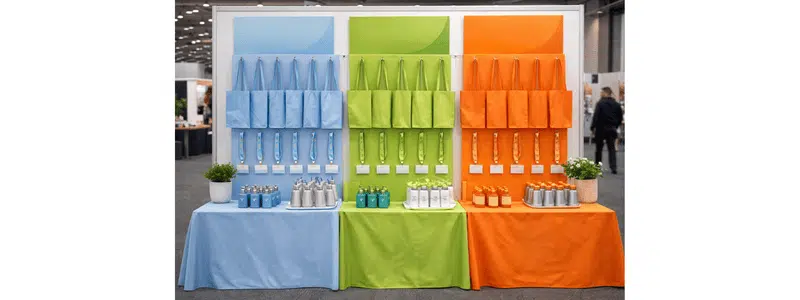
- Colour-blocked tote walls (same tote in 3 shades) to create a visual drawcard
Matching table setup: tablecloth, signage, merch and packaging all aligned to your palette
Best for: conferences, expo stands, pop-ups, sponsorship tables.
Corporate gift packs that feel premium
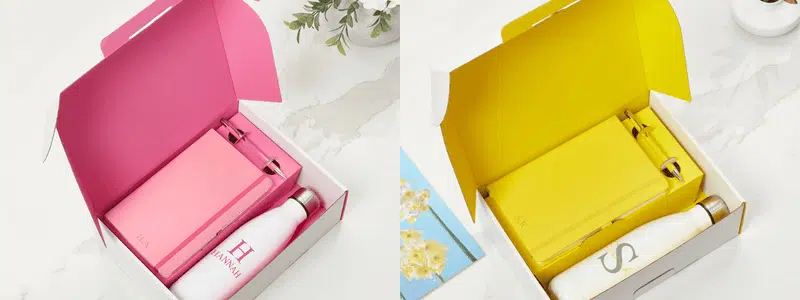
Gift packs are where neutrals shine. They help your logo pop and feel more “kept”, especially for desk items.
Try:
- Stone notebook + black pen + matching bottle (one accent colour in packaging)
- A “calm palette” for executive gifting: navy, charcoal, white
- A “values palette” for eco gifting: natural, green, soft neutrals
Best for: client gifting, leadership packs, end-of-year gifting.
Onboarding packs that build culture fast
Colour helps onboarding feel like joining something real, not receiving random items.
Try:
- One base colour across all items (bottle, notebook, tote)
- One accent colour for “welcome” energy (sticker sheet, lanyard, socks)
- A consistent internal packaging colour so it feels cohesive when opened
Best for: new starters, remote teams, graduate programs.
Product launches and hype moments
This is where bold colour earns its keep. The goal is visibility and memorability.
Try:
- Bright hero product (cap or tote) + neutral supporting items
- Limited-edition colour drop to create urgency
- Colour-coded ranges for different audiences (VIP vs general attendees)
Best for: launches, brand campaigns, seasonal pushes.
Internal campaigns and milestones
Colour can reinforce behaviours and celebrate outcomes without needing a huge creative budget.
Try:
- Colour-coded rewards (green for wellbeing month, blue for learning, red for sales sprint)
- “Team colour packs” for departments at a company-wide event
- Milestone merchandise that changes colour each quarter to build collectability
Best for: staff engagement, wellbeing initiatives, internal recognition.
Want help building a colour-led merch range?
If you’re planning a campaign, onboarding kit, conference giveaway or corporate gift pack, we can help you map a palette and recommend products that suit your brand and audience.
Reach out to our team to explore how you can bring colour touches to your next promotional merchandise campaign.
FAQs
Our corporate colour isn’t very appealing. How do we work with it?
Totally normal. Use your corporate colour as an accent, not the whole base. Build the range around neutrals (black, stone, grey, navy) then add your brand colour on details like lids, straps, zipper pulls, packaging, or print highlights.
My corporate colour is hard to colour match. What should I do?
Aim for "colour harmony" instead of a perfect match. Pick the closest shade available in the product range, then keep the rest of the palette consistent. If matching is critical, use:
- neutrals for the product
- your brand colour in print, embroidery, or packaging
That's usually where colour accuracy is easiest to control.
Can we use more than one colour without it looking messy?
Yes, just keep it structured. The sweet spot is:
- 1 base colour
- 1 accent colour
- 1 contrast colour (for logo readability)
If you want more variety, vary the shade not the colour family (tone-on-tone looks intentional).
What if we want our merch to feel more premium instantly?
Go neutral-first. Premium usually comes from:
- muted tones (stone, charcoal, navy)
- matte finishes
- high contrast branding
Then add one bold colour as a pop so it still feels like your brand, not generic.
How do we choose colours for a mixed audience (clients, staff, event attendees)?
Choose a neutral base that suits everyone, then tailor the accent:
- neutral kit for broad appeal
- brighter accent for events
- softer or darker accent for corporate gifting
Same campaign, different energy, still cohesive.